SAS - Scandinavian Airlines
Scandinavia’s leading international airline2025 • UI Design, Design System, Website Redesign
I worked at SAS (Scandinavian Airlines) as a UI Designer, focusing on key parts of the company’s digital platforms. My main area was post-purchase flows and travel extras—including seats, baggage, upgrades, and add-ons—one of the most high-traffic areas with direct impact on both customer experience and revenue.
Alongside this, I collaborated across multiple teams and projects with product, brand, engineering, and business stakeholders, supporting consistency through a shared design system. During my time at SAS, the company went through a major brand transformation together with an external agency, and I helped translate the new identity into the digital product experience—supporting a shift toward a more leisure- and youth-oriented audience while embedding brand values of being trustworthy, engaging, and helpful across key touchpoints.
Establishing a Shared Design System Foundation
When I joined SAS, design and UI patterns were not aligned across departments. Teams worked in separate codebases with their own solutions, which led to inconsistent interfaces and duplicated effort across the digital experience.
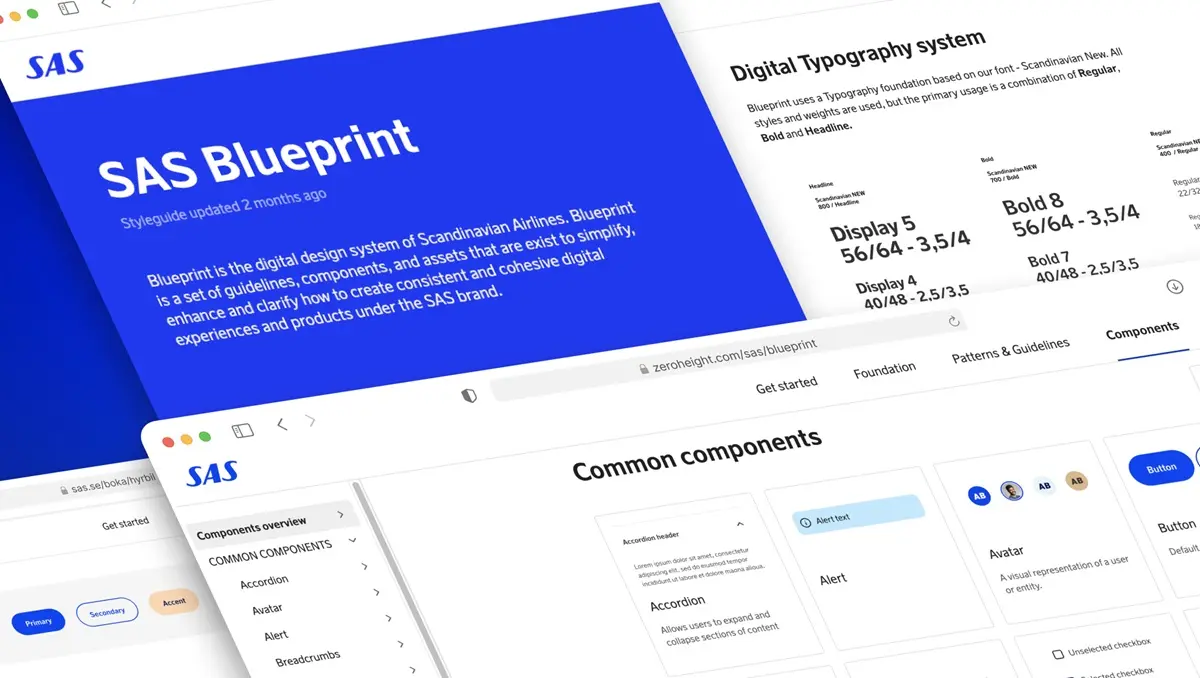
To improve alignment, we introduced a documentation-first approach using Zeroheight. By documenting design principles, foundations, and UI patterns — and linking them directly to both design files and code — this work created an emerging single source of truth for designers, developers, and product teams. The documentation helped create clarity across teams and set the direction for a design system that could continue to evolve over time.
Commercial Components - Compact Banner
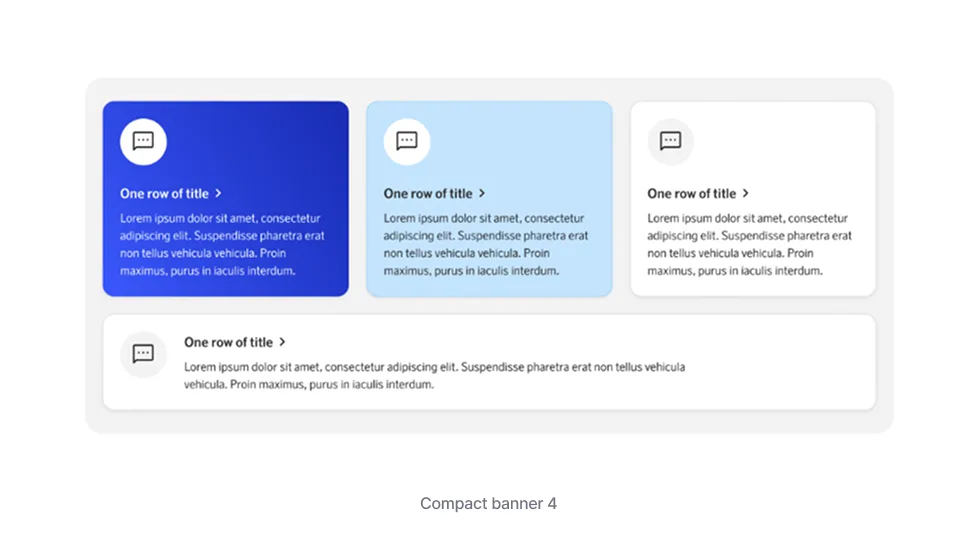
The Compact Banner was created to balance commercial visibility with clarity. As many stakeholders wanted their messages to stand out, the component helped enforce hierarchy, focus on key information, and turn “everything should pop” into a structured, scalable design solution.
- Designed to scale from 1 to 6 banners, adapting to grid or carousel layouts depending on screen size.
- Uses a defined surface color sequence to create visual rhythm when multiple banners are displayed together.
- Clearly signals that the banner is clickable and leads forward, supported by hover and focus state.
- Typography and icon alignment are handled to maintain visual balance across variable content lengths.
Selected Work Across SAS Digital Experience
Below is a selection of representative work across SAS’s digital ecosystem, spanning multiple teams and initiatives.
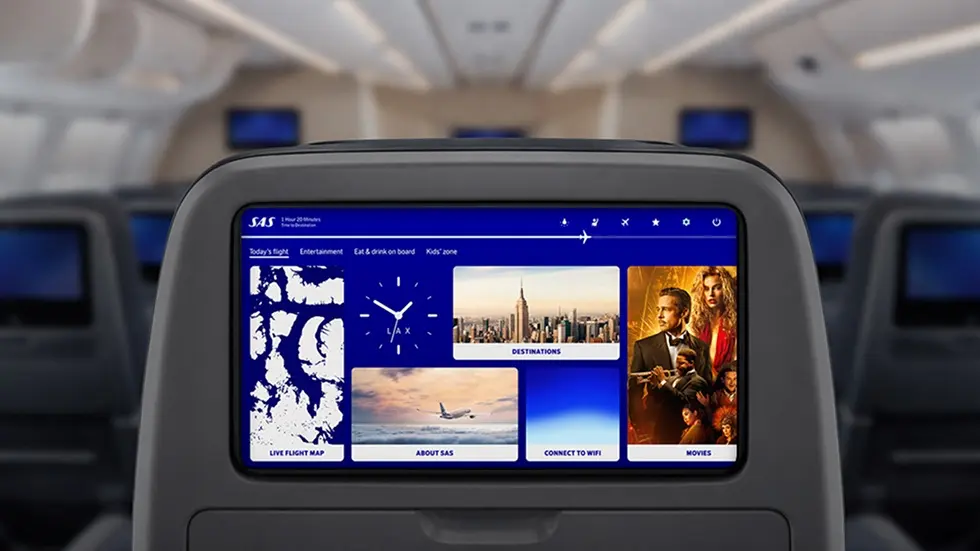
In-flight Entertainment Systems
I was responsible for the design of in-flight entertainment screens, adapting a white-label platform to the SAS experience through close collaboration with product teams, external vendors, and brand stakeholders.
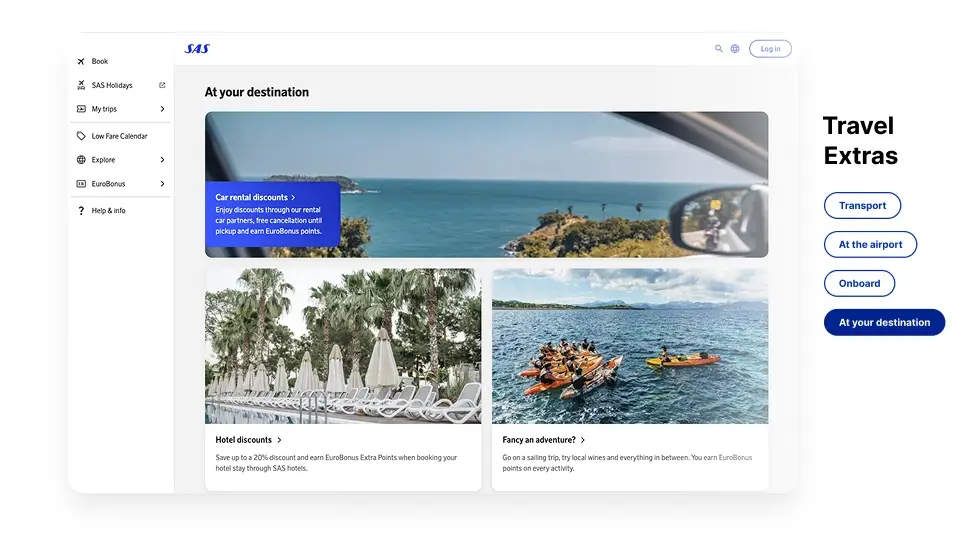
I led UI coordination for third-party services such as car rentals, hotels, and transfers, shaping white-label solutions to feel seamless and aligned with SAS’s brand and design standards. The work focused on balancing external vendor constraints with a consistent SAS experience.
A key part of the work was designing where and how the car rental product appeared across the customer journey. This included multiple touchpoints — from standalone pages to embedded widgets — and required strategic decisions around placement, hierarchy, and timing.
The goal was to support commercial objectives while maintaining a clear, trustworthy user experience, ensuring the car rental offering felt like a natural extension of SAS’s product rather than an external add-on.
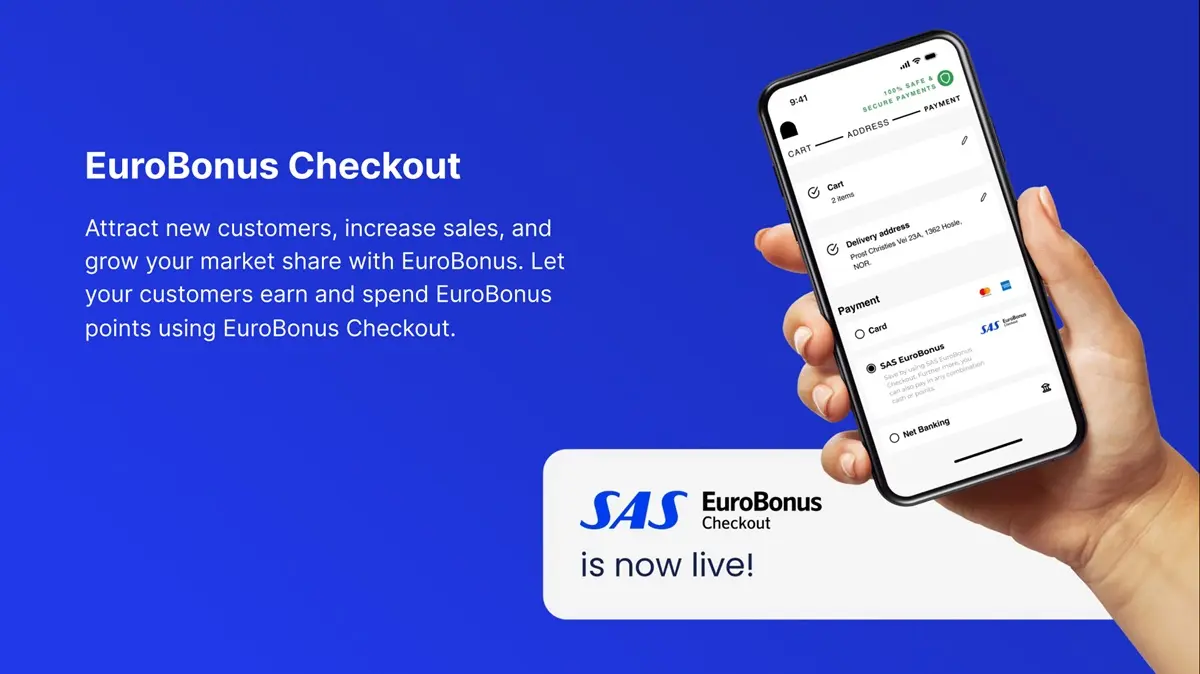
EuroBonus Checkout was launched to enable members to earn and spend EuroBonus points directly at checkout with selected online retailers. The initiative aimed to make point-based payments feel as seamless and intuitive as a standard e-commerce checkout experience.
I worked on the landing page experience, where members were introduced to the concept, value proposition, and flow, as well as on the checkout integration in collaboration with an external payment partner.
Driving Consistency at Organisational Scale
During my time at SAS, I worked in an organisation undergoing continuous change — navigating economic challenges, operational disruptions, leadership changes, internal restructures, and a major brand transformation. The company was actively redefining its strategy to remain competitive in a rapidly evolving market.
Within this environment, I worked closely with commercial and sales teams operating under high pressure to meet revenue goals, particularly around ancillary revenue. This required designing revenue-driven experiences that supported business objectives while maintaining a clear, respectful, and trust-building user experience.
As a team, we learned to adapt quickly through iteration and course correction, improving cross-team collaboration, strengthening internal communication, and laying the foundation for a more structured design practice through the development of a shared design system. These experiences strengthened my ability to operate effectively in complex organisations, balance commercial and user needs, and contribute to scalable, resilient design processes.Next project
Float
Early-stage startup (via venture studio) delivering innovative funding solutions for subscription businesses, focused on conversion and brand experience.